When the Conductor’s Baton Became a Tool
When the conductor’s baton became a tool, it made beat patterns easier to see in larger ensembles. Learn how its role changed and when it helps today.
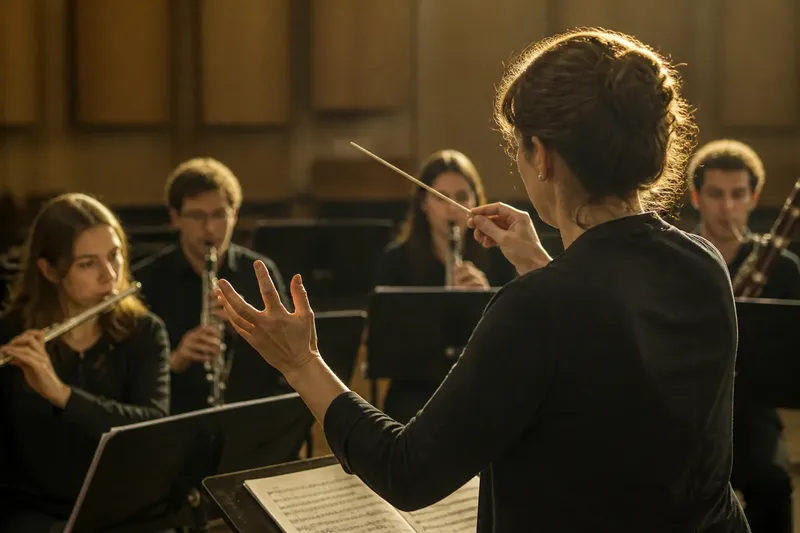
When the conductor’s baton became a tool, it offered a clearer way to show time to musicians who could not easily see one another. The change was gradual: baton use became established in European orchestral conducting during the nineteenth century, after earlier leaders had kept time with hands, bows, rolled paper and other visible movements.
How did conductors keep time before the baton?
Before a separate conductor became standard in many orchestras, timekeeping could belong to a musician inside the group. A keyboard player might lead from the instrument, or a violinist might direct from the front desk while playing. A leader could also mark the pulse with a hand, a bow or a staff.
These methods did not disappear when baton conducting developed. They answered different needs. A player leading from an instrument could support the harmony while guiding colleagues; a visible beat from outside the ensemble let one person focus on the group as a whole.
When did the baton become a conducting tool?
There was no single date when every ensemble adopted it. The baton became increasingly associated with orchestral conducting in the nineteenth century, as the conductor’s role took shape as a distinct position. Earlier practices varied by place, ensemble and occasion, so a precise universal starting point would be misleading.
The shift was not simply from “no conductor” to “conductor with baton”. Musicians already coordinated through leaders, gestures and shared musical habits. What changed was the visibility and separation of the leadership role: a person could stand before an orchestra, use a small object to make movements easier to see, and concentrate on shaping the performance rather than playing a part at the same time.
Why did the baton suit orchestras?
In a large ensemble, players may be separated by distance, music stands and the layout of the stage. A baton can make the path and point of a beat easier to distinguish than a small hand movement. It can also make a preparatory cue visible to players who are not close to the conductor.
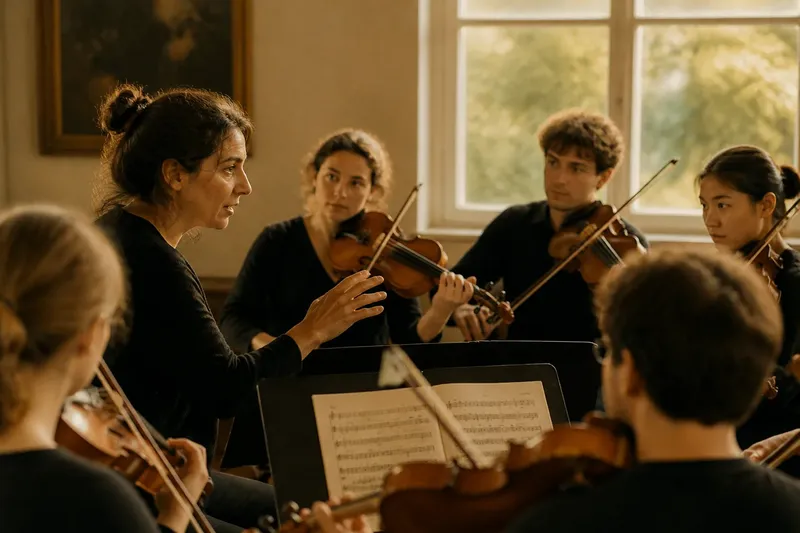
The baton is an aid, not a complete language. Conductors still use their free hand, gaze, posture and breath. A beat pattern may clarify pulse, while a held gesture can indicate a sustained sound or a release. Musicians interpret these signals alongside the score and what they hear.
Did the baton give conductors authority?
The baton made a gesture more visible; it did not create the conductor’s authority by itself. Authority depends on the ensemble’s working arrangements, the conductor’s role and the musicians’ shared decisions about interpretation.
Think of a torch in a dark room: it helps people see a direction, but it does not decide where they ought to go. In the same way, a baton can clarify an entrance without settling the sound, balance or phrasing the players will make together.
How can you tell whether a baton helps?
Start with a specific coordination problem. Is a section missing an entrance because it cannot see the cue, or are players unsure where a phrase ends? A baton may help with visibility, but a different seating angle, a clearer preparatory movement or a cue from a player may address the actual difficulty more directly.
- Check whether players at the back can see the conductor’s beat; if not, try a clearer baton path or adjust the sightline, then keep the option that makes the pulse visible.
- Check whether an entrance is missed despite a clear pulse; if so, add a distinct preparatory cue, or ask a player with a clear sightline to lead that entrance.
- Check whether players can see the release of a held note; if not, make the release gesture more distinct, or agree on a shared breath or player cue.
- Check whether the group loses pulse while watching the conductor; if so, reduce unnecessary motion and rehearse listening to the rhythmic parts, or let a section leader mark the pulse.
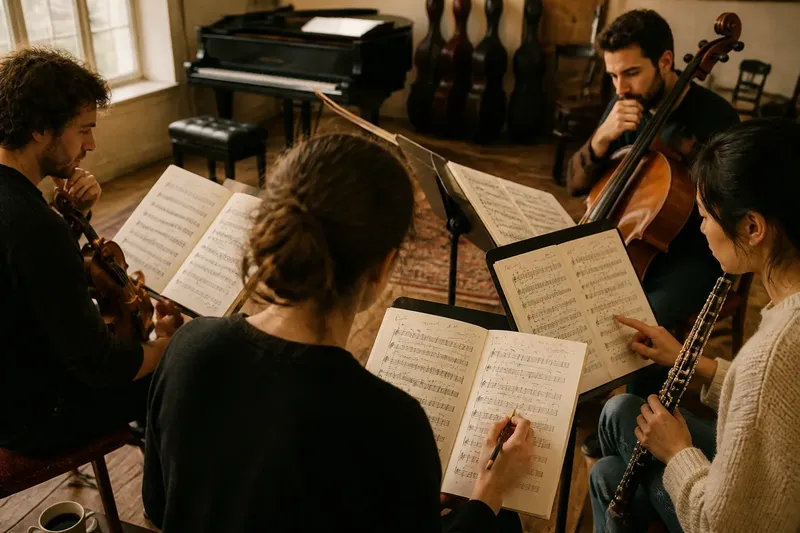
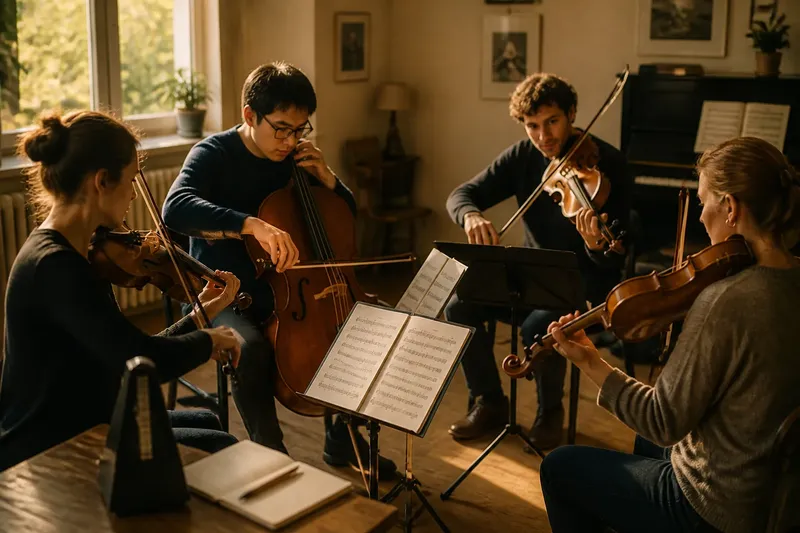
- Check whether a small ensemble already sees and hears one another; if so, use shared breathing and eye contact, or introduce a baton only if a particular cue remains unclear.
- Check whether the baton obscures the conductor’s hand or face; if it does, put it aside for that passage, or change the gesture so the intended signal remains visible.
Say you are leading a fictional rehearsal of a woodwind group. The flautist at the far end misses an entrance because a music stand blocks the conductor’s right hand. First, the group confirms that the flautist can see the conductor’s baton above the stand. Next, the conductor gives a clear preparatory movement and the group repeats the passage. The expected observable result is a visible cue the flautist can follow; if the stand still blocks the view, the group can shift the stand or have a nearby player lead the entrance. The baton addresses the sightline only if it actually remains visible.
What do musicians ask about the conductor’s baton?
Did the baton replace the conductor’s hands?
No. Conductors continue to use both hands, along with gaze, posture and breath. A baton makes some movements easier to see, but it does not carry every cue.
Can an ensemble perform without a conductor?
Yes. Small groups often coordinate through listening, eye contact and cues from individual players. Larger groups can also perform without a conductor if they agree how to organise entrances and transitions.
Does a baton always show the tempo?
No. It may show the pulse, but it can also signal an entrance, a release or a change in energy. Players should connect the gesture with the score and the sound around them.
Why do some conductors choose not to use one?
Hands may be clearer for the gesture they want, or the ensemble may be close enough to communicate without a baton. The choice depends on the music, the layout and what the players can see.
What does the baton’s history mean for ensembles now?
The baton’s nineteenth-century rise reflects a change in how some orchestras organised leadership: conducting became more visibly separate from playing, and the baton helped that leader communicate across a larger group. It did not erase older ways of keeping time or make one arrangement right for every ensemble.
When considering the conductor’s baton, identify the signal players need to see, then choose the clearest way to give it. That may be a baton, an open hand or a cue from within the group; the useful tool is the one that leaves musicians free to hear one another as well as watch.