A Full Section or One Player at a Time?
Choose full-section or one-player-at-a-time rehearsal for a difficult ensemble passage by matching the method to the coordination problem you need to hear.
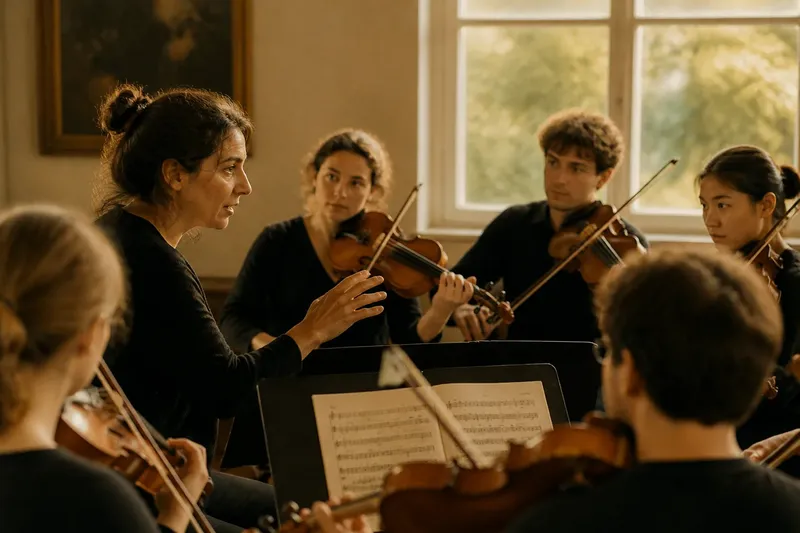
Should you rehearse a difficult ensemble passage with the full section or one player at a time? The right choice depends on what is going wrong: a group may need to coordinate its shared sound, or an individual may need room to clarify an entrance, rhythm or line. Choose the method that makes the problem audible, then bring players back together to check whether the fix holds.
What do you need to hear?
Begin by naming the uncertainty in plain language. Is the section entering together? Are notes landing in the same place? Does a melody disappear beneath accompaniment? Is one player’s rhythm unclear, or does the passage only come apart when everyone plays?
These questions point to different rehearsal conditions. A full-section run lets you hear blend, balance and collective timing in context. One-player-at-a-time rehearsal separates the lines, so you can locate an uncertain entrance or compare how players interpret the same rhythm. Neither approach is a better version of the other; each is a listening tool.
Keep the passage narrow. Mark the relevant bar numbers in each part, agree where the group will start and stop, and identify one thing to listen for. A broad instruction such as “make it tighter” gives players little to act on. “Listen for the second violin’s pickup against the viola’s held note” directs attention to a particular relationship.
When does a full section fit better?
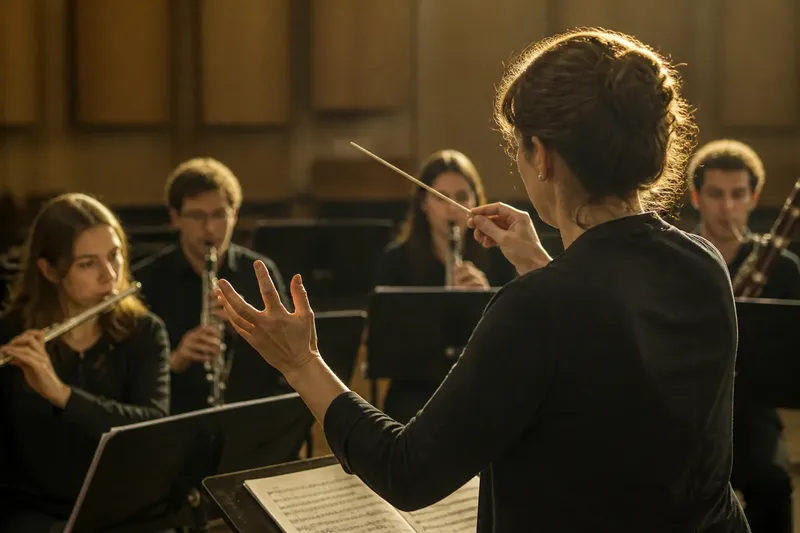
Keep the whole section playing when the difficulty belongs to the group sound rather than to a single line. This is especially useful when players must coordinate a shared attack, release, articulation, dynamic change or hand-off between desks. The combined sound tells you whether the group is actually together; isolated parts cannot reveal the same blend or weight.
Use this approach, too, when the passage depends on players adjusting to one another in real time. A section can have individually secure parts yet still sound unsettled if one desk follows a different articulation or if the lead player’s phrase does not carry across the group. Rehearsing together lets players hear those differences and respond while the musical texture is intact.
- Shared entrance: Start a little before the entrance and continue past it. Listen for whether the section attacks as one gesture, rather than judging only the first note.
- Unified articulation: Ask players to agree what the marked stroke or note length should sound like, then play the passage together. A common intention matters more than copying a neighbour’s movement.
- Balance within the section: Have the principal line remain clear while inner parts support it. A full group reveals whether a supporting voice is covering the phrase.
- Release or hand-off: Continue through the end of the phrase or into the next entrance. This shows whether players coordinate the point of departure as well as the start.
If the section loses its shape each time, avoid repeating the whole passage without a listening target. Isolate the moment where coordination changes, agree what players should hear there, and try again with the relevant context. The full group remains useful because it preserves the sound the players are trying to organise.
When should you hear one player at a time?
Ask players to take turns when you cannot tell which line is causing the confusion, or when a part needs to be heard without the section’s combined sound. This is useful for exposed entries, intricate rhythms, inner voices, and passages where several players may be masking one another. The point is diagnosis, not putting someone on trial.
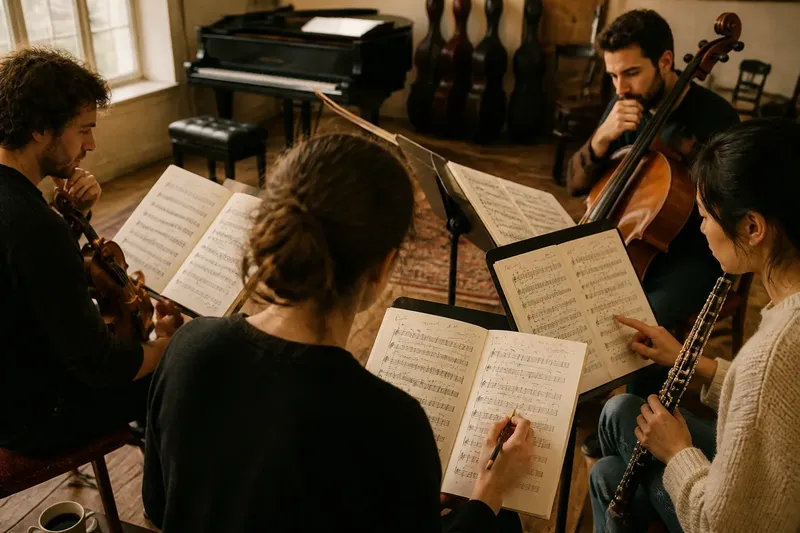
Have each player perform the same short span while the others listen. Ask listeners to track one feature, such as the length of a rest or the placement of an upbeat. If players interpret the printed rhythm differently, you can compare the versions directly. If they agree in isolation but the ensemble still falters, the main issue is more likely to be coordination between parts.
Take care not to turn an individual turn into a demand for a polished solo. A player may be able to clarify a rhythm with a quiet, steady approach before adding the full dynamic or character. Give one specific observation, then allow another attempt. If the part is secure on its own, move on to the relationships between players rather than drilling it in isolation.
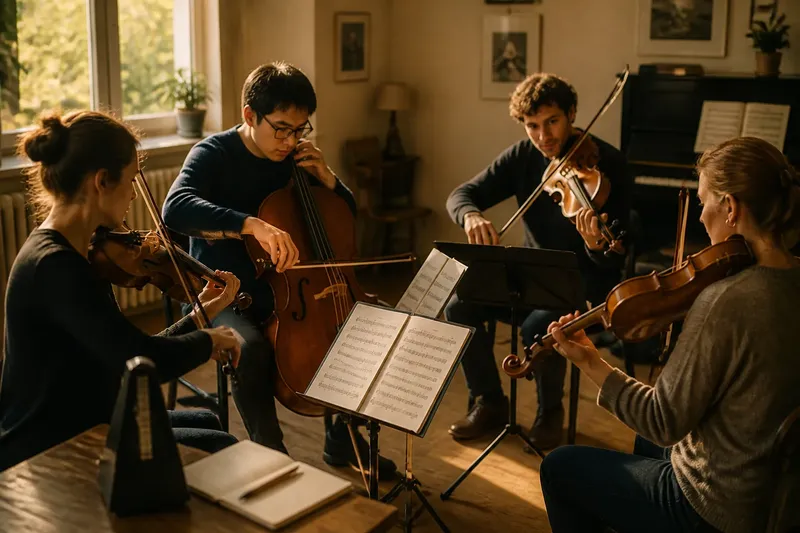
Imagine a string section that repeatedly hesitates before a soft entrance. If each player takes a turn and one uses a longer rest than the others expect, the mismatch becomes audible; the group can agree how the rest leads into the note. If all players place the entrance similarly alone but still hesitate together, return to the full section and listen for how they cue and follow one another.
How should you combine the two approaches?
Move from the method that exposes the problem to the one that checks the solution. If the full section sounds uneven, hear the relevant players separately to identify differing rhythms or articulations. Agree on the musical intention, then play together again to see whether the sound now aligns.
If individual turns sound clear but the passage breaks down in context, stop isolating lines. Put the section back together and narrow the listening target to a particular entrance, release or exchange. This is like sorting tangled keys on a table before trying the correct one in the lock: separation helps identify an item, but only using it in context answers whether it fits.
Keep the transition simple:
- Play the short passage as a full section and identify the audible problem.
- Choose one player or line to hear separately if the source is unclear.
- Agree on one shared detail, such as the pickup length or release point.
- Play together again, starting early enough to hear the preparation and continuing far enough to hear the result.
- Decide whether the problem has moved, changed or remained. Adjust the rehearsal method to that new information.
Do not insist that every player take a turn if the issue is already clear. Equally, do not keep repeating a full-section passage when the combined sound hides the detail you need to hear. A quick change of method can save attention and keep rehearsal focused.
Which rehearsal method fits your situation?
Should the whole section rehearse a shared entrance?
Usually, yes, because the question is whether players coordinate the entrance as a group. Include the preceding beat or rest so the section can hear and shape the preparation together.
Should players take turns with an unclear rhythm?
Use individual turns if you need to compare how the rhythm is being read or played. Once the interpretation is agreed, return to the group sound to check whether the rhythm works against the other parts.
What if the passage sounds secure alone but unstable together?
Rehearse as a full section and focus on the point where one line depends on another. Listen for the cue, the response and whether players leave enough room for the lead part to speak.
What if one player is repeatedly uncertain?
Let that player clarify the passage without the full texture, using a short span and a specific target. Then restore the section so the player can practise the entrance or line in its actual musical setting.
What should you decide before moving on?
After the passage, say what changed in terms everyone can hear: the entrance now aligns, the inner voice is clearer, or the release still spreads. This gives the section a useful reason either to continue together or to isolate a line again.
A full-section or one-player-at-a-time rehearsal is most effective when the choice follows the question. Use the full group to hear shared sound and interaction; separate players to expose individual lines and differences in interpretation. For a difficult ensemble passage, keep the method flexible: diagnose with one listening condition, then check the music in the condition where it must finally work.