The First Read-Through Is a Map, Not a Test
A first read-through maps a new ensemble score: mark its landmarks, uncertain handovers and questions so rehearsal can focus without constant stops.
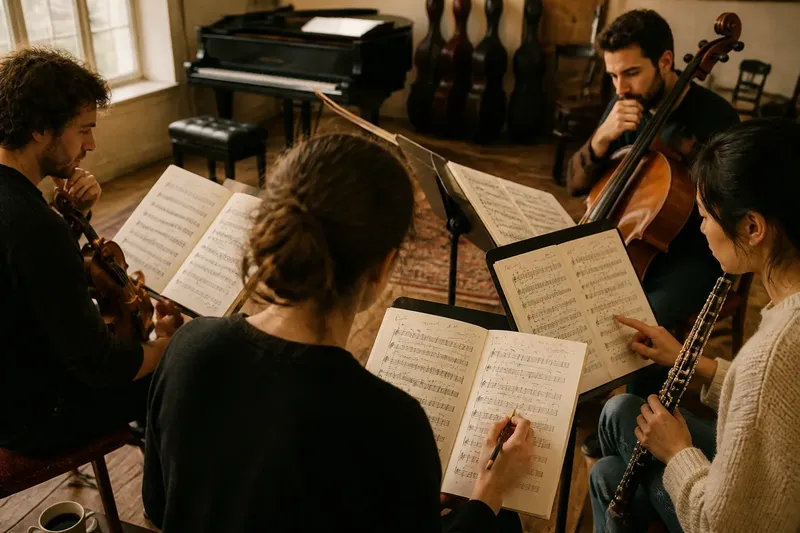
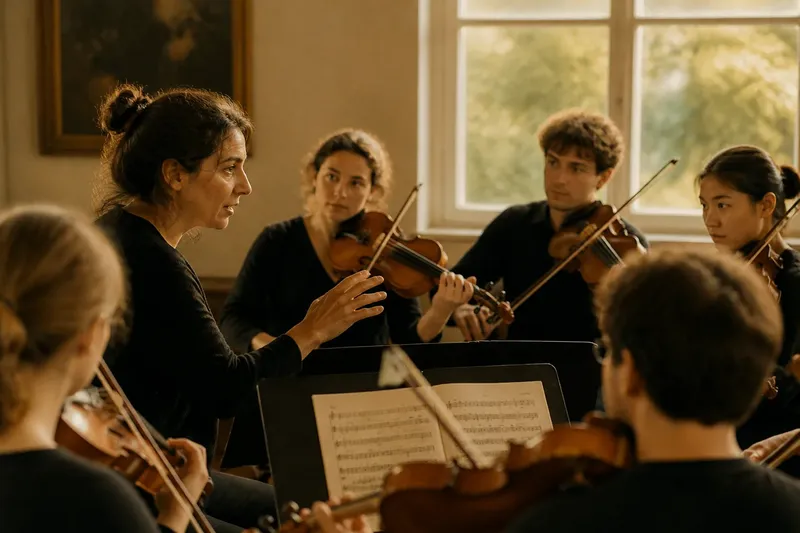
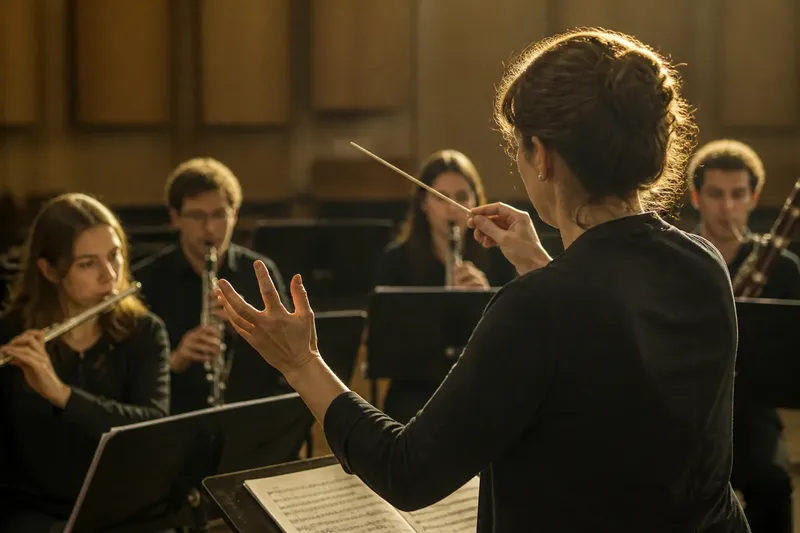
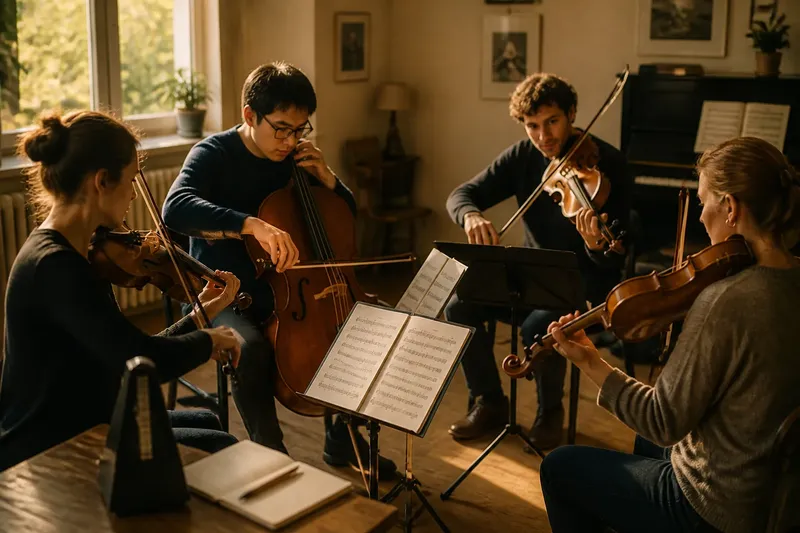
At the end of a first read-through, the ensemble has reached the final bar, but the players have circled different passages and are unsure where the music changed direction. A first read-through is a map-making pass, not a test of whether everyone can play a new score cleanly. Its job is to reveal the piece’s landmarks, expose uncertain transitions and collect questions for later rehearsal without interrupting every stumble.
That distinction changes what you listen for and what you write down. Treat the score like a paper map: mark the junctions that may need attention, rather than stopping to repair every rough patch of road as you travel. Agree on a simple approach before starting, keep moving where possible, and leave detailed repairs for a later pass.
Why does the first pass keep stopping?
A group often stops because one player misses a note, loses a rest or cannot find the next entrance. The immediate problem is audible, so it feels urgent. But stopping at each local difficulty can hide the larger shape and consume time before anyone knows whether the passage matters to the ensemble’s coordination.
These interruptions usually have a few different causes. Identifying which one is present helps the group choose what to record and what to let pass.
- Every error feels like an emergency. Players may confuse a personal reading snag with a group-level obstacle. If the sound continues and the form remains clear, note the spot and carry on.
- The score has not been surveyed. Without noticing repeats, rests, tempo changes or section labels in advance, players may mistake a structural turn for a surprise. Look for visible landmarks before playing, and keep your place if the music takes an unexpected route.
- The group has no shared marking system. One player writes “hard”, another circles a bar number, and a third remembers only the sound. Agree on a small set of marks and record the location plus the question, not a verdict.
- Players expect the read-through to sound polished. That pressure encourages apologies, explanations and restarts. Set the aim plainly: discover how the parts fit, even if some notes are uncertain.
Before beginning, decide who may call for a stop. One useful rule is to keep moving unless the group has lost its place, cannot tell whose entrance comes next, or has reached an agreed stopping point. If a safety or instrument concern arises, deal with it rather than pressing on. Routine slips can wait.
What should players mark before starting?
Give the ensemble a short silent look at the score. This is not a full analysis session. The aim is to make the page easier to follow while everyone is playing.
First, locate the broad sections. Notice rehearsal letters, repeated passages, changes of tempo or character, long rests and any obvious shift in texture. A pianist might mark where a new accompaniment pattern begins; a wind player might note a long rest followed by an exposed entrance. These are clues to structure, not claims about how the music must sound.
Next, check practical navigation. Confirm the opening bar, any repeat signs, first and second endings, written cuts if present, and the final bar. If the score has page turns, identify places where a player may need help or a different copy arrangement. A wrong route through a repeat can disrupt the whole group, so settle that before the first note.
Then choose a few legible marks. For example:
- Use a question mark beside a passage whose rhythm or notation needs checking.
- Use a small arrow where the next entrance depends on another part’s cue.
- Circle a rehearsal letter or other landmark that should help everyone regroup.
- Write “listen” beside a point where balance or a handover is unclear.
- Add a short bar number or page reference to every note, so the issue can be found again.
Keep these notes provisional. A first impression may change once the ensemble hears the whole piece. Mark only what helps the next rehearsal make a decision; dense annotations can become another obstacle to reading.
How can the ensemble keep going without losing useful clues?
Choose a pace that lets the group maintain the main pulse and find its place. That does not mean forcing a tempo the players cannot follow. If the score’s indicated pace is impractical for a first pass, agree on a manageable reading pace before starting, then play steadily enough to hear how parts relate. Avoid changing speed each time one player reaches a difficult figure.
When someone misses an entrance, keep the ensemble moving if the next landmark is clear. The player can rejoin at a marked rehearsal letter, the next section, or another agreed point. If the group loses the place, stop together, identify the bar or cue that caused the confusion, and resume from a location everyone can find. A brief, precise reset is more useful than replaying a long passage automatically.
Listen for relationships rather than judging isolated notes. Does a melody pass from one player to another? Does the accompaniment signal a change? Is there a rest after which several players must enter together? Does the texture thin out before a new section? These observations help the ensemble identify which uncertain spots are about coordination and which are simply individual reading questions.
Say you are reading a short piece with a repeated opening and a new section after a long rest. The flute misses its entrance after the rest, while the strings continue. Instead of restarting from the beginning, the group marks the rest’s location, notes what cue might make the entrance clearer, and carries on to the next rehearsal letter. The next rehearsal can then check whether the cue is audible and agree how the flute should rejoin if it misses it again.
During the pass, keep a short issue list on a separate page or in one player’s notebook. Use a location and a neutral question: “page two, after the rest: what signals the entrance?” is more useful than “flute is late”. If several players have marked the same place, that is a good candidate for rehearsal. If only one player has a reading snag and the ensemble stays together, it may need individual preparation rather than group time.
What should the group do with each kind of difficulty?
Not every uncertainty calls for the same response. Sort the notes after the pass, then decide what action fits each one.
- Lost place or unclear route: verify the bar numbers, repeat signs and section order together. Agree on a clear restart location and mark it in every part.
- Uncertain rhythm or notation: name the exact figure and ask the relevant player to check the score before the next rehearsal. Bring the question back to the group if the answer affects a shared entrance or rhythm.
- Unclear handover: identify who has the lead before and after the change. In rehearsal, play the approach and the handover together, listening for the outgoing line to give way and the incoming one to arrive clearly.
- Uncertain balance: note which line needs to be heard and where. Revisit that section with the relevant parts playing, then adjust dynamics or articulation as the ensemble decides.
- Repeated breakdown: choose a short, identifiable span around the problem. Work on the transition into it as well as the difficult bar, so the group practises arriving there and moving on.
Keep the diagnosis specific. “The middle is messy” gives the next rehearsal no clear starting point. “We lose the count during the second player’s rest and enter together too early” describes an observable coordination question. The group can then decide whether to count aloud, clarify a cue or mark subdivisions in the parts.
Which questions should wait until the pass is over?
Some decisions need the context of the whole piece. Others are quick factual checks. To avoid stopping for every discussion, save broader interpretation and uncertain details for a short review after the final bar.
Should we stop for every wrong note?
No. If the mistake does not make the group lose its place or disrupt a shared entrance, mark it and continue. Stop when players cannot recover together or when the music’s route has become unclear.
What if several players miss the same entrance?
Record it as a group coordination issue rather than an individual fault. At the next rehearsal, identify the preceding cue, the length of the rest and the place where everyone should prepare to enter.
How should we mark a score without cluttering it?
Use a small, agreed set of symbols and keep each note tied to a bar or rehearsal mark. Put longer questions on a shared issue list rather than writing a paragraph into the music.
Should we follow every tempo and character marking on the first pass?
Notice and respect the score’s directions, but agree on a reading pace the ensemble can sustain. If a marking raises a musical question, record it for discussion instead of repeatedly changing the pace mid-pass.
How can the first read-through shape the next rehearsal?
After playing, take a few minutes to compare notes. Begin with the route through the score: confirm repeats, endings and restart points. Then group the remaining questions by type—navigation, rhythm, cueing, balance or interpretation—so the rehearsal can address related problems together.
Choose a small number of priorities rather than attempting to fix every mark at once. A sensible order is to settle score navigation first, then work on transitions that affect several players, and then address local details. The order can change if a particular passage blocks the ensemble from reaching the next section.
Assign preparation where it belongs. A player can check an isolated accidental or unfamiliar rhythm before rehearsal; the group should spend shared time on questions that depend on hearing other parts. For each priority, agree what to listen for and how the ensemble will know the issue has become clearer. That may mean everyone can enter from the cue, or the melody remains audible through a handover.
The first read-through is useful precisely because it does not need to settle everything. Use it to make the score familiar, mark where attention is needed and leave enough music in motion to understand the shape. When the group meets again, the page should point towards the next decision—not report every moment that went imperfectly. Search for “first read-through ensemble” guidance when you need to reset this approach: the aim is a shared map, with clear landmarks and honest questions ready for rehearsal.