The Metronome Won't Fix a Shared Pulse
A metronome can steady individual counting, but a shared pulse comes from listening for attacks, releases and the way musical phrases move together.
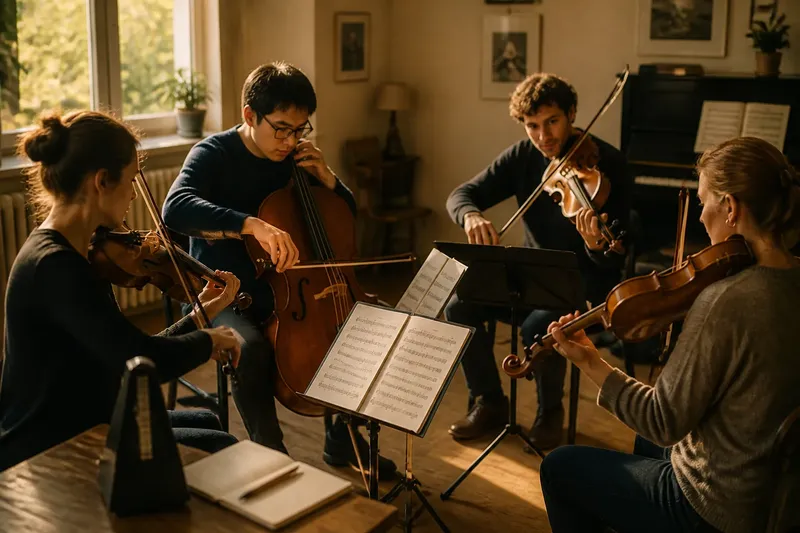
When an ensemble follows a metronome and still sounds stiff, the click may be drawing attention away from the music’s phrasing. A shared pulse is not just a row of matching beats: it is a common sense of how the music travels between them.
Try listening to the space between clicks. Does a long note lean towards the next harmony? Does a phrase ease into its arrival, or stop abruptly at each beat? These details can matter more than whether every player lands on the click.
What makes a pulse feel shared?
Pulse is the motion listeners sense beneath the notes. Players can keep that motion steady while shaping individual beats with different weight or length. In a waltz, for instance, the first beat may feel broader than the next two. Giving every beat identical emphasis can make the count regular but the dance feel flat.
A shared pulse does not mean every note must start at precisely the same instant. Some passages need a united attack; others depend on one line answering another. The ensemble needs to understand the musical relationship: where the parts should meet, and where one should lead or respond.
Think of the pulse as the handle of a shared shopping basket. Each person may carry a different item, but the basket moves smoothly only if everyone responds to its direction.
What can you hear beyond the beat?
A metronome can confirm a regular beat, but it cannot decide how the group should shape a phrase. Listen for musical features that the click does not express:
- Phrase direction: Does the line gather energy towards a note, or settle away from it? If the parts seem to aim at different destinations, then agree which note shapes the phrase; otherwise, keep the existing direction and listen for a more specific point of mismatch.
- Note weight: Does a repeated figure sound buoyant, heavy or even? If players give the same notes different emphasis, then choose a shared character; otherwise, preserve the contrast and check whether the disagreement is actually in the timing.
- Sound length: Does a written rest begin after a clean release, or does the sound carry into it? If the gap feels blurred, then agree how the preceding note ends; otherwise, leave the release alone and listen to the next entrance.
- Musical handover: Does a melody pass naturally from one instrument to another? If the change sounds like a break, then decide how the outgoing and incoming lines connect; otherwise, retain the handover and focus on the phrase’s broader shape.
- Harmony: Does the bass movement support the upper parts’ arrival? If the chord change feels unsettled, then let the group listen to the bass and the chord together; otherwise, keep the harmonic balance and examine another musical feature.
- Silence: Does a pause feel intentional or like the music has stopped? If the silence loses the phrase’s direction, then agree what musical event leads out of it; otherwise, keep the space and avoid filling it with extra sound.
How can you use a metronome without following it blindly?
Give the click one clear job. It might mark the main beat while you listen to a phrase’s shape, or help reveal whether a repeated rhythm is being counted consistently. Avoid asking it to dictate every detail of timing and expression.
- Choose a passage: Pick a short section where a musical relationship is easy to hear, such as a chord change or a phrase passed between instruments.
- Name the question: Decide whether you are checking the beat, a rhythmic subdivision, the length of a rest or the shape of the phrase.
- Set the click’s role: Agree which beat it marks. Keep the setting comfortable enough for players to hear the music around it.
- Play and listen: Notice whether the intended musical feature stays clear. Do not treat every click as a separate target.
- Turn it off: Play the passage again without the device. If the ensemble keeps its direction, the click has served its purpose; if not, return to the named question rather than simply repeating the passage.
Say a quartet is working on a phrase where the cello’s repeated notes continue beneath a violin melody. The players begin with the cello as the click’s reference and notice that the violin’s phrase loses direction, even though the beats remain steady. They then turn off the metronome and listen to how the violin’s line reaches its cadence. The tradeoff is clear: the click helped organise the accompaniment, but it was not the right guide for shaping the whole phrase.
What do players ask about shared pulse?
Why does the ensemble sound stiff if the beat is steady?
Players may be matching beats while giving phrases different weight, length or direction. Listen to how the lines move between beats and towards their musical arrivals.
Should every part follow the melody?
No. A bass line may establish the harmony while an inner part answers the melody. Decide which musical role matters most at that point, then listen to how the other parts relate to it.
When should you turn off the metronome?
Turn it off once it has answered the specific timing question you chose. If the music still feels disconnected, listen for phrasing, releases or balance rather than adding more clicks.
What if the group hears the phrase differently?
Describe the difference in musical terms: one player may hear a note as the destination, while another hears it as a passing point. Check the score for written articulation or timing, then agree how the phrase should continue.
How can you carry the shared pulse into performance?
In performance, a group cannot rely on a metronome to shape the music. Players need to hear the roles within the ensemble: which line carries motion, which sound marks a change, and where the phrase settles. Those relationships let the pulse remain steady without making every part behave alike.
Before a run-through, choose one passage and name the musical feature that should guide it. If the metronome has helped clarify the count, set it aside and listen for that feature instead. A shared pulse is easier to sustain when the ensemble hears not only where the beats fall, but also what the music is doing between them.